俄罗斯:西伯利亚中心开工建设,旨在2029年初之前扩大无病毒马铃薯微型块茎的生产规模
Russian scientists have begun building a breeding and micropropagation centre in Krasnoobsk, Novosibirsk Oblast. It is due in early 2029 and is meant to scale up minituber production for seed potatoes.
Construction has begun in Krasnoobsk, Novosibirsk Oblast, on a Centre for Breeding and Micropropagation at the Institute of Cytology and Genetics of the Siberian Branch of the Russian Academy of Sciences, RIA Novosti reported on 5 November. Commissioning is planned for early 2029. For potato, the stated aim is to scale up production of minitubers cleaned of viruses and bacteria.
What is being built
根据 俄新社, the three-storey building will have more than 4,500 square metres. The basement will hold biomaterial stores and vernalisation chambers. The upper floors will house growing and propagation sections, biochemical laboratories and areas for DNA analysis and PCR diagnostics.
The centre is not potato-specific. The report also lists wheat, barley, oats, soybean, rapeseed and miscanthus, along with a line for amateur gardeners. It gives neither the cost of the project nor a production capacity for minitubers.
工作日。一键取消订阅。
How the minitubers are made
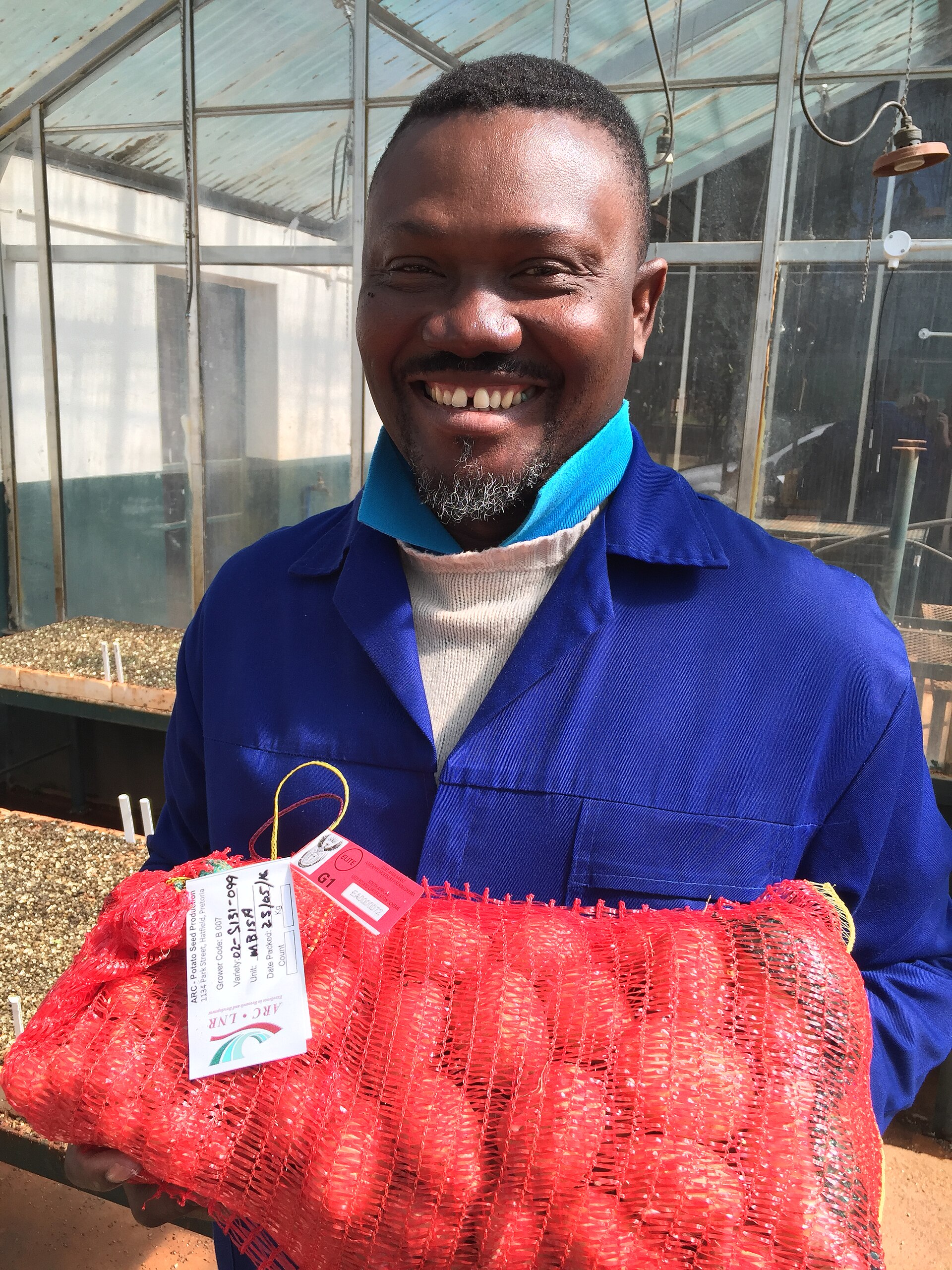
Svetlana Kapustyanchik, head of the Siberian Research Institute of Plant Production and Breeding, a branch of the institute, describes minitubers as high-quality seed planting material that has passed through a stage of cleaning from viruses and bacteria. They are grown in vitro, reach about three centimetres and are then planted in soil to produce a crop of healthy seed potatoes.
Scaling up, RIA Novosti reports, should give farmers access to more collection samples of planting material and speed up the creation of new varieties.
Three varieties in the pipeline
The Siberian scientists are preparing three potato varieties for state variety testing:
- Avangard: a medium-early table variety; the report gives no date for its submission.
- 针叶林: an early-maturing variety, planned for submission in 2027.
- Ataman: an early table variety, planned for submission in 2027–2030.
The timeline for Ataman has already shifted. In an earlier TASS report, the institute said it planned to submit the variety in 2026 and described it as drought-tolerant and resistant to late blight; the November report puts its submission at 2027–2030.
Those dates refer to entry into testing, not to seed being available for sale. The report gives no yield data for any of the three.
Why seed is a live issue
Russia’s potato sector leans heavily on foreign genetics. Domestic varieties account for only 8–10% of Russian potato area, and about 90% of the varieties used rest on imported genetics, Potatoes.News has reported, even when seed is multiplied inside Russia.
Policy is moving in the same direction as the Krasnoobsk project. On 2 November, Prime Minister Mikhail Mishustin announced wider support for buying and sowing domestically bred seed, with about RUB 4 billion in the draft 2027 budget. As 我们注意到, none of the reports published so far names potato among the eligible crops.
这对农场意味着什么?
- No change for the 2027 planting: the centre is due in early 2029, so current seed plans are unaffected. Farms should keep buying on tested lots and documented health status.
- Siberian growers: Taiga and Ataman are worth following, but judge them by state testing and local trial results, not by the announcement.
- Seed producers: more minitubers would matter only if later field multiplication keeps stocks healthy. Discuss rotation, isolation and testing with your agronomist.
来源: RIA Novosti, 5 November 2026; TASS on the Ataman variety; Potatoes.News on the 2027 seed subsidy.